
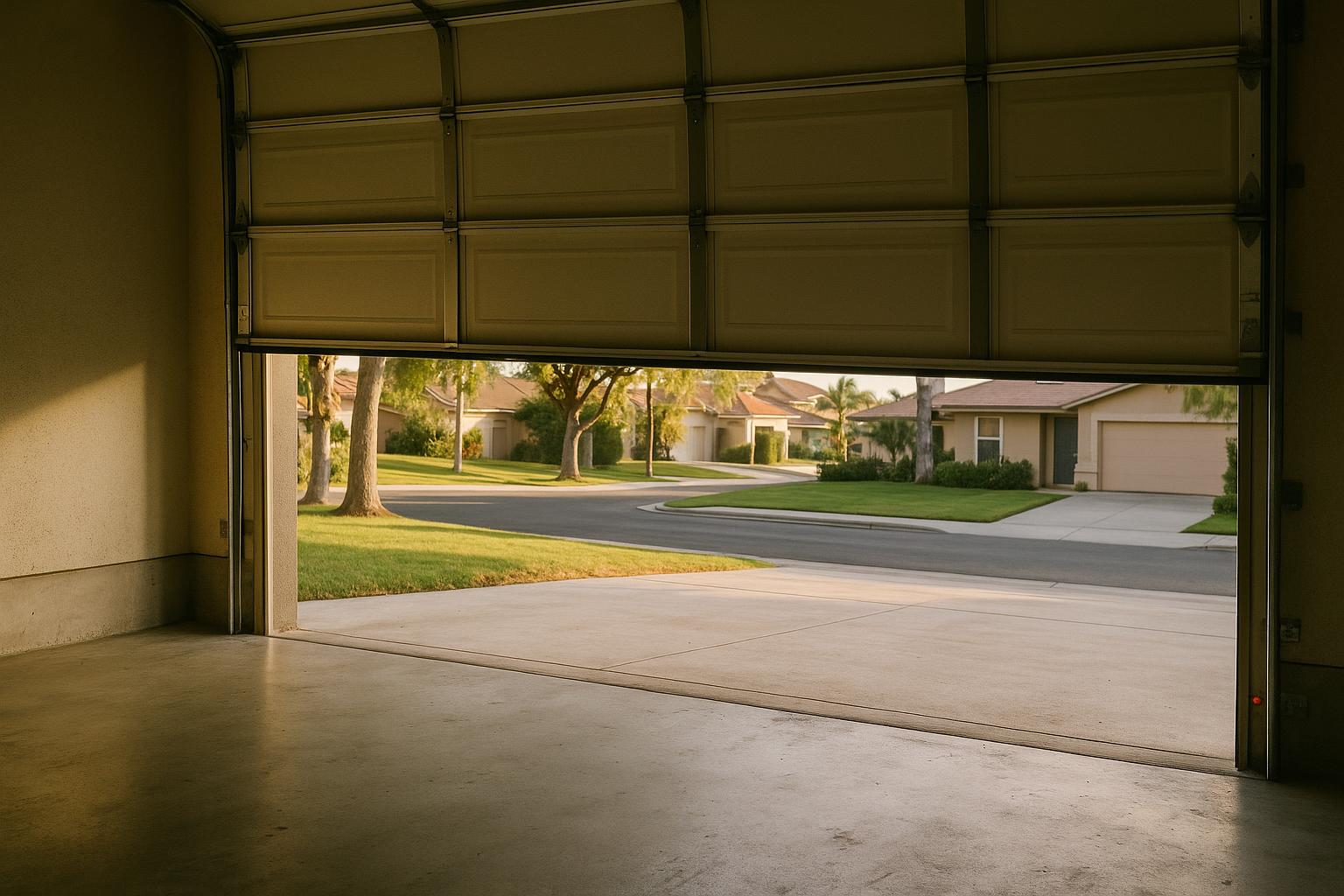
That Frustrating Moment When Your Garage Door Won't Stay Closed
You press the button on your remote, watch the garage door start its descent, and then — halfway down or just inches from the floor — it suddenly reverses and goes right back up. You try again. Same thing. Maybe you try holding the wall button, and it still won't cooperate.
This is one of the most common garage door complaints we hear from homeowners in Simi Valley, and it's more than just an annoyance. A garage door that won't fully close is a security risk, an energy efficiency problem, and an open invitation for pests, dust, and debris to enter your garage.
The good news is that this issue usually has a straightforward cause. Let's walk through the most likely reasons your garage door reverses before hitting the floor and what you can do about each one.
1. Misaligned or Dirty Safety Sensors
This is the number one cause of a garage door that reverses unexpectedly. Every garage door opener manufactured after 1993 is required by federal law to have photo-eye safety sensors mounted near the bottom of the door tracks, about six inches off the ground. These sensors send an invisible beam across the opening, and if anything breaks that beam while the door is closing, the system reverses the door to prevent injury or damage.
Here's the thing — these sensors are sensitive by design. Even minor issues can trigger a false reversal:
- Dirt or cobwebs on the sensor lenses can block the beam
- Direct sunlight hitting the sensor can interfere with the infrared signal
- Bumped or shifted sensors that are no longer aligned with each other
- Damaged wiring between the sensors and the opener unit
Start by wiping both sensor lenses with a clean, soft cloth. Then check that both sensors have steady indicator lights — typically one green and one amber. If one is blinking, the sensors are likely misaligned. Gently adjust the blinking sensor until the light becomes steady.
A Simi Valley–Specific Note on Sensors
Living in Simi Valley means dealing with plenty of afternoon sun, especially during summer months when the sun sits low on the western horizon. If your garage faces west or southwest, sun glare on your safety sensors can cause intermittent reversal problems that only happen at certain times of day. A simple cardboard shade or sensor hood can solve this issue entirely.
2. Incorrect Close-Limit Settings
Your garage door opener has adjustable limit settings that tell it exactly how far the door should travel when opening and closing. If the close-limit setting is off, the opener may think the door has hit an obstruction when it's actually just reaching the floor. The opener interprets the resistance as a safety concern and reverses.
This is especially common after a new opener installation, a spring replacement, or even seasonal temperature changes that cause metal components to expand and contract slightly. On most openers, the limit adjustment is a small screw or dial on the back or side of the motor unit. Turning it in small increments — usually a quarter turn at a time — can resolve the issue.
However, if you're not comfortable making this adjustment yourself, it's best to call a professional. Setting the limits incorrectly can create a door that closes with too much force, which is a genuine safety hazard.
3. Worn or Broken Garage Door Springs
Your garage door springs do the heavy lifting — literally. They counterbalance the weight of the door so the opener only needs to provide a small amount of force to move it. When springs wear out or lose tension over time, the door becomes heavier for the opener to manage.
As the door descends, the opener may struggle against the increased weight, interpret the extra resistance as an obstruction, and reverse. You might also notice the door closing unevenly, moving slower than usual, or the opener motor straining audibly.
Important: Garage door springs are under extreme tension and can cause serious injury if handled improperly. Spring repair or replacement should always be performed by an experienced technician. This is not a DIY job.
4. Damaged or Obstructed Tracks
The metal tracks that guide your garage door need to be clean, properly aligned, and free of dents or bends. Over time, tracks can become misaligned from regular use, accidental impacts (like bumping them with a car or storage items), or loose mounting brackets.
When the rollers encounter a bent section of track or a buildup of debris, the door meets resistance. The opener's safety system detects that resistance and reverses the door. Inspect your tracks visually — look for obvious bends, gaps between the track and the wall, or accumulated grime. Minor debris can be cleaned out, but bent tracks typically need professional attention to avoid making the problem worse.
5. Worn Rollers Creating Excess Friction
Garage door rollers — the small wheels that ride inside the tracks — wear out over time. Nylon rollers can crack and chip, while steel rollers can rust and seize. When rollers don't spin freely, they create friction that the opener has to work against. Enough friction, and the opener reverses.
Listen to your door as it operates. Grinding, squealing, or scraping sounds are strong indicators that your rollers need attention. Replacing worn rollers is a relatively affordable repair that can dramatically improve how your door operates and extend the life of your opener.
6. Issues With the Opener Itself
If you've checked everything above and the door still reverses, the problem may be with the opener's logic board or internal components. Electrical surges, age, and general wear can cause the control board to malfunction, sending incorrect signals to the motor.
Openers typically last 10 to 15 years. If yours is approaching that range and developing multiple issues, replacement is often more cost-effective than repeated repairs. Modern openers also come with significant upgrades — quieter operation, smartphone connectivity, battery backup, and improved safety features.
When to Call a Professional
Some of these fixes — like cleaning sensors or checking for track debris — are safe for most homeowners to handle. But many garage door repairs involve heavy components under tension, electrical systems, and precise adjustments that carry real risk if done incorrectly.
If your garage door keeps reversing and basic troubleshooting hasn't solved the problem, it's time to bring in a professional. At Simi Valley Garage Door Repair, we diagnose reversal issues quickly and provide honest recommendations — whether it's a simple sensor adjustment or a more involved repair. We serve homeowners throughout Simi Valley, Moorpark, Thousand Oaks, and nearby communities with same-day service whenever possible.
Don't Ignore a Reversing Garage Door
A garage door that won't close isn't just inconvenient — it compromises your home's security and exposes your garage to weather, pests, and potential intruders. Most reversal issues are fixable the same day, and addressing them early prevents more expensive problems down the road.
If your garage door has been giving you trouble, give us a call. We'll get it closing properly again so you can stop standing in the driveway pressing the button and hoping for the best.