
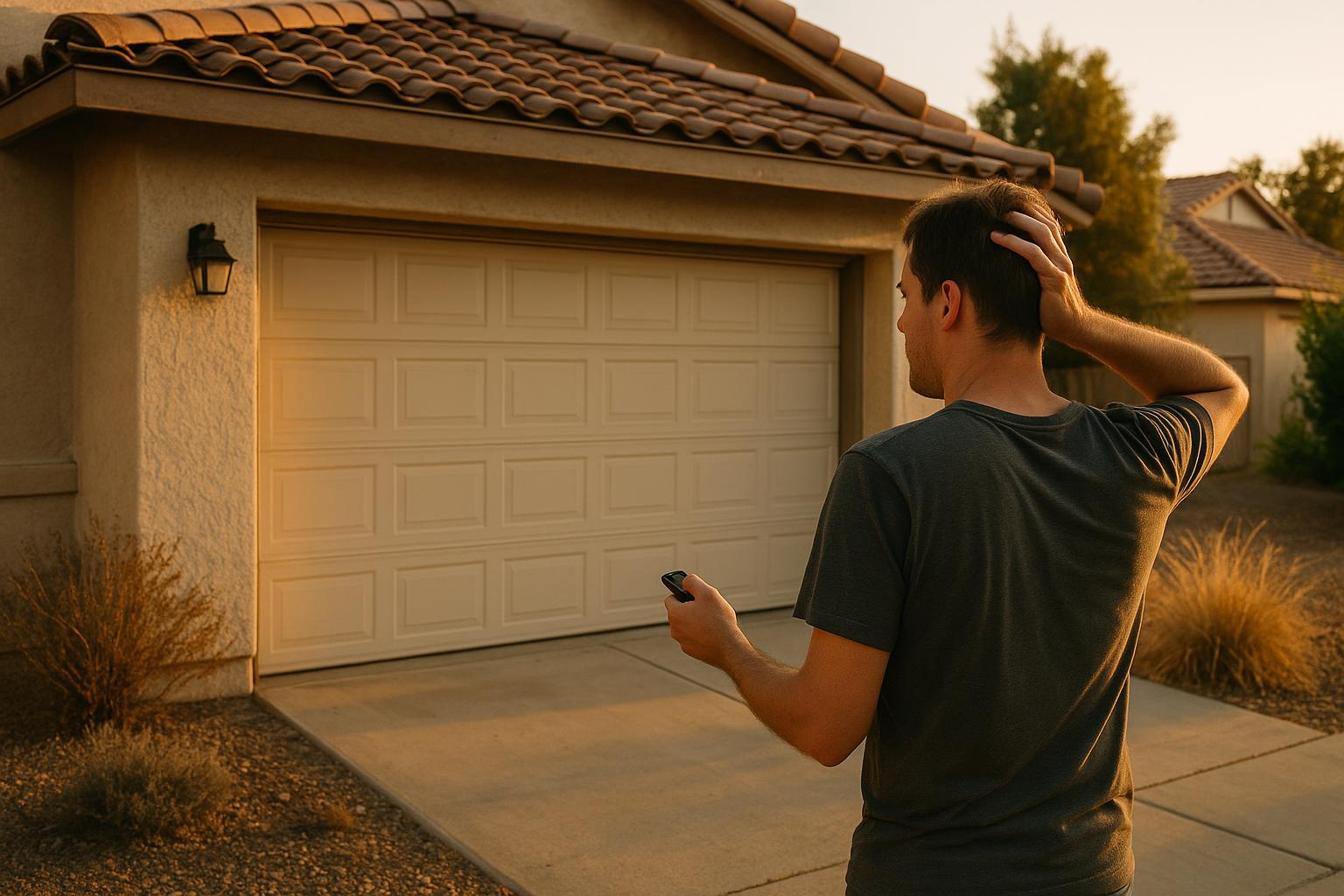
You're Running Late — and Your Garage Door Won't Budge
It's a scenario that plays out in driveways across Simi Valley more often than you'd think. You press the button on your garage door remote, hear a click or a hum, and… nothing. The door stays firmly shut. You're already running behind for work or school drop-off, and now you're stuck.
A garage door that won't open — especially first thing in the morning — is more than an inconvenience. It can leave your car trapped, disrupt your schedule, and even raise security concerns. The good news is that many of the most common causes are identifiable and fixable, sometimes without even calling a technician.
Let's walk through the most likely reasons your garage door refuses to cooperate and what you can do about each one.
1. Dead Batteries in Your Remote or Keypad
It sounds almost too simple, but this is the number one reason people think their garage door is broken when it's actually fine. Remote transmitter batteries and exterior keypad batteries wear out gradually, and they tend to fail at the worst possible moment.
What to do: Replace the batteries in your remote with fresh ones. If you have a wall-mounted keypad outside, check those batteries too. If the wall-mounted button inside the garage operates the door normally, your remote batteries were the culprit.
2. The Door Is Locked — and You Didn't Know It
Many garage doors have a manual lock mechanism, either a slide lock on the inside or a lock feature built into the opener. If someone in your household accidentally engaged the lock, the opener motor will strain against it and the door won't move.
What to do: Check the interior side of your garage door for a horizontal lock bar or slide bolt. If it's engaged, slide it back to the unlocked position. Some opener models also have a lock button on the wall console — make sure it hasn't been pressed accidentally.
3. Cold Weather Has Affected the Components
While Simi Valley enjoys relatively mild weather compared to much of the country, winter mornings in the valley can still dip into the 30s and low 40s. Cold temperatures can cause metal components to contract, lubricant to thicken, and weatherstripping along the bottom of the door to freeze to the garage floor if moisture is present.
What to do: Try operating the door using the wall button. If it struggles or moves slowly, the cold may be affecting the springs or lubricant. Applying a silicone-based garage door lubricant to the springs, rollers, and hinges can help. If the bottom seal is stuck to the floor, gently break the seal with a flat tool — don't force the opener to do it, as this can damage the motor.
4. The Photo-Eye Sensors Are Blocked or Misaligned
Modern garage doors are equipped with safety sensors near the bottom of the door tracks. These photo-eye sensors send an invisible beam across the opening, and if anything interrupts that beam, the door won't close — and in some cases, it won't open properly either.
What to do: Check both sensors on either side of the garage door opening. Look for:
- Dirt, cobwebs, or debris covering the sensor lens
- A blinking light on one or both sensors, which usually indicates misalignment
- Objects like trash cans, shoes, or storage boxes blocking the beam path
Clean the lenses with a soft cloth and make sure both sensors are pointed directly at each other. The indicator lights should be steady when properly aligned.
5. A Broken Torsion Spring
This is the most common mechanical failure that prevents a garage door from opening. Torsion springs are mounted above the door and carry the enormous weight of the door itself. When a spring breaks, the opener motor simply doesn't have enough power to lift the door on its own.
Signs of a broken spring:
- You heard a loud bang from the garage, possibly the night before
- There's a visible gap in the spring above the door
- The door feels extremely heavy when you try to lift it manually
- The opener hums or strains but the door barely moves
What to do: Do not attempt to replace a torsion spring yourself. These springs are under extreme tension and can cause serious injury if handled improperly. This is a job for a trained garage door technician. If you're in the Simi Valley area, a professional can typically replace broken springs the same day.
6. The Opener Has Been Disconnected
Every garage door opener has an emergency release cord — usually a red handle hanging from the opener rail. If this cord has been pulled, the door is disconnected from the opener and will only operate manually.
What to do: Pull the release cord back toward the opener (usually toward the motor unit) and then try operating the door with the remote or wall button. The trolley should re-engage with the opener chain or belt, restoring automatic operation.
7. Power Issues or a Tripped Circuit Breaker
If your garage door opener has no lights, no sounds, and no response at all, it may have lost power. A tripped breaker, a blown fuse, or even a GFCI outlet that has tripped can cut power to the unit without you realizing it.
What to do: Check your electrical panel for a tripped breaker. If your opener is plugged into a GFCI outlet, press the reset button on the outlet. Also check that the power cord hasn't come unplugged — it happens more often than you'd expect, especially if you've been working in the garage.
When to Call a Professional
Some of these issues — dead batteries, blocked sensors, a pulled emergency cord — are easy fixes you can handle on your own. But others, like broken springs, worn-out cables, or motor failures, require professional tools and expertise.
Here's a general rule: if the problem involves anything under high tension (springs, cables) or electrical wiring, it's safer and smarter to call a garage door technician. Attempting these repairs without proper training can lead to injury or further damage to your door system.
For homeowners in Simi Valley, Moorpark, Thousand Oaks, and surrounding communities, having a reliable local garage door company on speed dial can save you hours of frustration. A good technician can often diagnose and fix the issue in a single visit, getting your morning routine back on track.
Prevent Morning Surprises with Regular Maintenance
The best way to avoid being stuck in your garage on a busy morning is to stay ahead of problems before they happen. A yearly garage door tune-up can catch worn springs, fraying cables, misaligned tracks, and other issues before they leave you stranded.
During a maintenance visit, a technician will typically:
- Inspect and lubricate all moving parts
- Test the balance and alignment of the door
- Check the condition of springs and cables
- Verify sensor alignment and safety features
- Tighten hardware and adjust the opener settings
Think of it like an oil change for your car — a small investment that prevents expensive breakdowns down the road.
Don't Let a Stuck Door Ruin Your Day
A garage door that won't open is stressful, but it's rarely a mystery. By working through the common causes listed above, most Simi Valley homeowners can at least identify the problem — and in many cases, fix it themselves in minutes. For everything else, a quick call to a local professional can have you back up and running before lunch.