
Why Is Your Garage Door So Loud?
If you've noticed your garage door grinding, squealing, rattling, or banging every time it opens or closes, you're not alone. Noisy garage doors are one of the most common complaints we hear from homeowners in Simi Valley, and for good reason — a loud garage door is more than just an annoyance. It can be an early warning sign that something needs attention before it turns into a costly repair.
The good news is that most garage door noises have identifiable causes, and many of them are fixable. In this guide, we'll walk you through the most common sounds your garage door might be making, what they mean, and what you should do about each one.
Grinding or Scraping Sounds
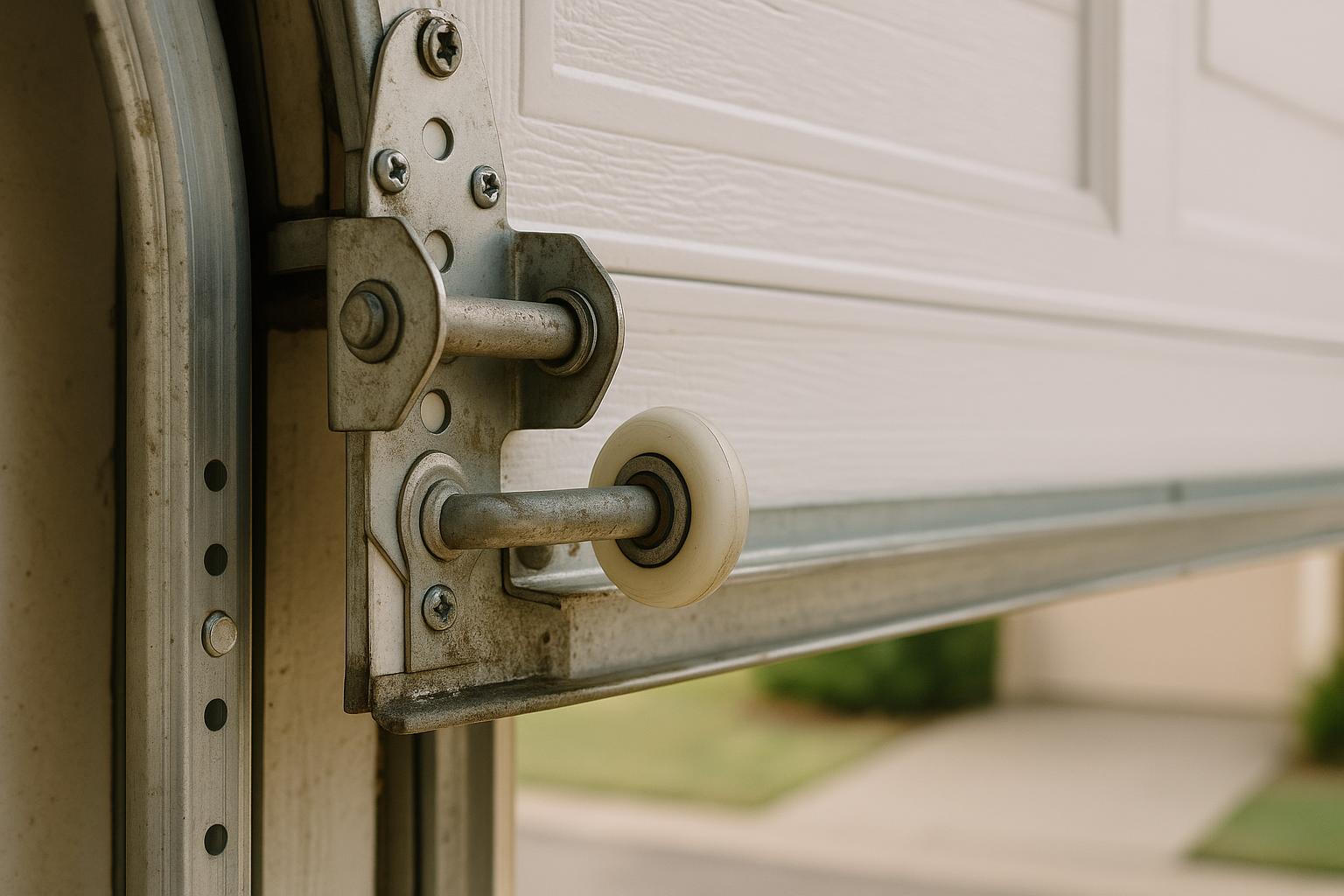
A grinding or scraping noise usually points to a problem with your garage door's tracks or rollers. Over time, metal rollers can wear down, develop flat spots, or accumulate dirt and debris that causes friction as the door moves along the track.
Misaligned tracks are another common culprit. If the tracks have shifted even slightly — which can happen from regular use, temperature changes, or an accidental bump — the door may scrape against the metal as it travels up and down.
What to Do
- Inspect the tracks for visible bends, gaps, or debris buildup.
- Check that the rollers spin freely and aren't cracked or worn flat.
- If you have metal rollers, consider upgrading to nylon rollers, which operate much more quietly.
- If the tracks appear misaligned, contact a professional rather than trying to adjust them yourself — improper adjustments can make the problem worse or create a safety hazard.
Squealing or Squeaking Sounds
High-pitched squealing or squeaking is almost always a lubrication issue. Your garage door system has numerous moving parts — hinges, rollers, springs, and bearings — that all require periodic lubrication to function smoothly. When these components dry out, metal-on-metal contact produces that unmistakable squeal.
This is especially common during Simi Valley's dry summer months when heat and low humidity can cause lubricant to evaporate faster than usual.
What to Do
- Apply a silicone-based or lithium-based garage door lubricant to the rollers, hinges, springs, and bearing plates.
- Avoid using WD-40 as a long-term lubricant — it's a solvent that can actually strip away existing grease.
- Make lubrication part of a regular maintenance routine, ideally every six months.
Rattling or Vibrating Sounds
If your garage door sounds like it's shaking apart every time it moves, the issue is often loose hardware. The constant vibration of daily operation can gradually loosen nuts, bolts, and screws throughout the door and track system. Even the brackets that hold the tracks to the wall or ceiling can work themselves loose over time.
Another possibility is a loose garage door opener chain. Chain-drive openers are inherently louder than belt-drive models, but a chain that's lost its proper tension will slap and rattle excessively during operation.
What to Do
- Use a socket wrench to tighten all visible nuts and bolts on the door, tracks, and brackets. Be careful not to overtighten.
- Check your opener's chain or belt for proper tension — it should have about half an inch of play at the midpoint.
- If you're tired of chain-drive noise, ask about upgrading to a belt-drive opener, which operates significantly quieter.
Banging or Popping Sounds
A sudden bang or pop when the door starts moving can indicate a problem with the torsion springs. As springs age and lose tension, they can struggle to distribute the door's weight evenly, causing jerky movements and loud popping sounds. In some cases, a loud bang could mean a spring has actually broken — if this happens, stop using the door immediately and call a professional.
Popping sounds can also come from panels that have warped or shifted, causing them to flex against each other as the door moves.
What to Do
- Never attempt to repair or adjust torsion springs yourself — they're under extreme tension and can cause serious injury.
- If you hear a single loud bang followed by the door not working properly, a spring has likely broken and needs professional replacement.
- Inspect the door panels for visible warping, cracks, or gaps between sections.
Humming or Buzzing from the Opener
If the noise is coming from the garage door opener motor rather than the door itself, you might hear a humming or buzzing sound. This can mean the motor is straining to lift the door — possibly because of a worn gear, a failing capacitor, or simply because the opener is undersized for the weight of your door.
In some cases, the motor may hum but the door won't move at all. This often indicates a stripped gear inside the opener unit, which is a common wear item on older models.
What to Do
- If the motor runs but the door doesn't move, the internal gears likely need replacement.
- Check that the door isn't locked or that the disconnect cord hasn't been pulled.
- If your opener is more than 10-15 years old and struggling, it may be more cost-effective to replace it with a newer, quieter model.
When Noise Means It's Time for Professional Help
While some garage door noises can be resolved with basic maintenance like lubrication and tightening hardware, others signal problems that require professional expertise. Here are the situations where you should call a technician rather than attempting a DIY fix:
- Broken or damaged springs — these are under high tension and dangerous to handle.
- Severely misaligned tracks — improper adjustment can cause the door to fall.
- Opener motor failure — electrical and mechanical components inside the opener require specialized knowledge.
- Cables that are frayed or off the drum — cable repairs involve the spring system and should be handled by a professional.
- Persistent noise after basic maintenance — if lubrication and tightening don't solve the problem, there's likely a deeper issue at play.
Preventive Maintenance Keeps Things Quiet
The best way to prevent a noisy garage door is regular maintenance. A professional tune-up typically includes lubrication of all moving parts, tightening of hardware, inspection of springs and cables, track alignment checks, and opener adjustments. Most garage door professionals recommend scheduling a maintenance visit at least once a year.
At Simi Valley Garage Door Repair, we offer comprehensive maintenance and tune-up services designed to keep your door running smoothly and quietly for years to come. Whether you're dealing with a mysterious new noise or you just want to get ahead of potential problems, our team is here to help homeowners throughout Simi Valley, Moorpark, Thousand Oaks, and the surrounding areas.
Don't ignore a noisy garage door — what starts as a minor annoyance today could become a major repair tomorrow. Give us a call and let's get your garage door back to running the way it should.