
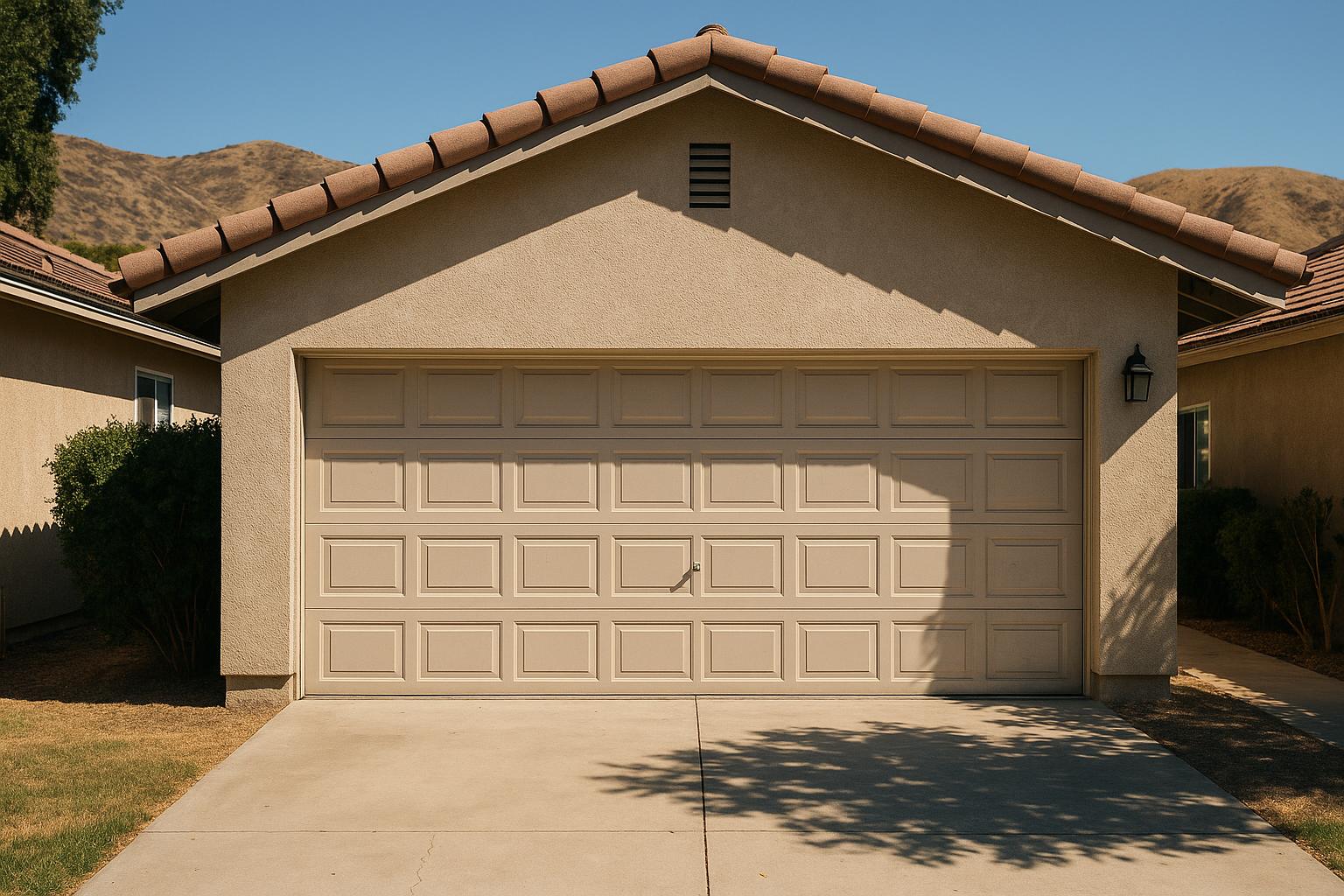
Simi Valley Summers Can Be Brutal on Your Garage Door
If you've lived in Simi Valley for any length of time, you know our summers don't mess around. Temperatures regularly climb into the triple digits, and that relentless heat doesn't just affect your air conditioning bill — it can quietly wreak havoc on your garage door system. From warped panels to dried-out lubricant, heat-related garage door problems are more common in our area than most homeowners realize.
The good news is that with a little awareness and some preventive care, you can keep your garage door running smoothly all summer long. Here's what the heat does to your garage door and how to stay ahead of it.
How Extreme Heat Affects Your Garage Door
Your garage door is one of the largest moving parts of your home, and it's made up of multiple components that all respond differently to temperature changes. Here's what happens when Simi Valley's summer heat sets in:
Metal Expansion
Metal components like tracks, springs, and hinges expand when they get hot. While this expansion is slight, it can change the way your door sits in the tracks and affect its alignment. If your door seems to stick or move unevenly on the hottest days, thermal expansion could be the culprit.
Lubricant Breakdown
The lubricant that keeps your garage door's moving parts operating smoothly can dry out or thin out much faster in extreme heat. When lubrication breaks down, you'll start hearing squeaking, grinding, or scraping sounds. More importantly, metal-on-metal friction accelerates wear on springs, rollers, and hinges — leading to premature failure.
Weatherstripping Deterioration
The rubber weatherstripping along the bottom and sides of your garage door is designed to seal out dust, pests, and outside air. Prolonged UV exposure and high temperatures cause this material to crack, shrink, and become brittle. Once your weatherstripping fails, hot air floods into your garage, making it even harder to regulate the temperature inside your home.
Warped or Faded Panels
Wooden garage doors are especially vulnerable to heat damage. Prolonged sun exposure can cause wood panels to warp, crack, or split. Even steel and aluminum doors aren't immune — dark-colored doors absorb more heat and can develop subtle warping over time. Sun-facing garage doors in neighborhoods throughout Simi Valley and nearby Moorpark tend to show these effects sooner than others.
Opener Strain
Your garage door opener's motor generates its own heat during operation. When it's already 105 degrees in your garage, that motor has to work harder to cool itself. Overheating can cause your opener to shut down mid-cycle, operate sluggishly, or even burn out entirely. This is especially common with older openers that lack modern thermal protection features.
How to Protect Your Garage Door from Heat Damage
You can't control the weather, but you can take proactive steps to minimize the impact of summer heat on your garage door system. Here's what we recommend to our customers across Simi Valley, Thousand Oaks, and the surrounding areas:
1. Schedule a Summer Tune-Up
A professional maintenance visit before the hottest months hit is one of the best investments you can make. During a tune-up, a technician will lubricate all moving parts with heat-resistant lubricant, check spring tension, inspect the tracks for alignment issues, and test your opener's performance. Think of it like an oil change for your car — routine maintenance prevents expensive repairs down the road.
2. Re-Lubricate More Frequently
If you typically lubricate your garage door's moving parts once or twice a year, consider adding an extra application during the summer. Use a silicone-based or lithium-based garage door lubricant — never WD-40, which is a solvent and not a true lubricant. Focus on the springs, rollers, hinges, and the track where the rollers make contact.
3. Replace Worn Weatherstripping
Inspect the rubber seal along the bottom of your door and the weatherstripping around the frame. If you see cracks, gaps, or sections that have pulled away, replace them promptly. Fresh weatherstripping helps keep hot air out and can even reduce energy costs by preventing your garage from becoming a heat sink that warms the rest of your home.
4. Consider Insulated Garage Door Panels
If your garage is attached to your home — as most are in Simi Valley's residential neighborhoods — an insulated garage door can make a significant difference. Insulated doors help regulate the temperature inside your garage, reducing strain on your opener and protecting items stored in the space. They also tend to be more durable and quieter than non-insulated models.
5. Paint or Refinish Sun-Exposed Doors
If you have a wooden garage door, make sure it has a quality exterior finish that protects against UV rays and moisture. For metal doors, a lighter paint color reflects more sunlight and absorbs less heat. If your door's finish is peeling, faded, or worn, a fresh coat of paint or sealant can extend its life considerably.
6. Ventilate Your Garage
Improving airflow in your garage helps reduce the ambient temperature, which in turn protects your opener and other components. Simple solutions include installing a garage exhaust fan, opening windows if your garage has them, or even cracking the garage door a few inches during the cooler parts of the day. Just be mindful of security when leaving the door partially open.
7. Test Your Opener's Safety Features
Heat can affect the sensors and electronics in your garage door opener. Test the auto-reverse feature monthly by placing a block of wood in the door's path. If the door doesn't reverse upon contact, the safety mechanism needs adjustment. Also check that the photo-eye sensors on either side of the door are clean and properly aligned — dust and heat shimmer can interfere with their operation.
When to Call a Professional
Some heat-related garage door issues are easy to handle yourself, but others require professional attention. Call a garage door technician if you notice any of the following:
- Your door is visibly off-track or binding during operation
- Springs appear stretched, corroded, or damaged
- Your opener overheats frequently or stops mid-cycle
- Panels are warped enough to create gaps when the door is closed
- You hear new grinding or popping sounds that lubrication doesn't fix
Attempting to repair springs or realign tracks on your own can be dangerous. Garage door springs are under extreme tension and can cause serious injury if handled improperly.
Stay Ahead of the Heat
Living in Simi Valley means enjoying sunshine most of the year, but it also means your garage door takes a beating from the elements. A little preventive maintenance goes a long way toward avoiding emergency repairs during the worst possible time — like when it's 110 degrees and your door won't close.
At Simi Valley Garage Door Repair, we help homeowners across Simi Valley, Chatsworth, Granada Hills, Northridge, and surrounding communities keep their garage doors in top shape year-round. Whether you need a summer tune-up, weatherstripping replacement, or a full garage door installation with modern insulation, we're here to help with honest pricing and fast service.
Don't wait for the heat to cause a breakdown. Contact us today to schedule your summer garage door maintenance and keep everything running smoothly when temperatures climb.