
Your Garage Door Springs Are Working Harder Than You Think
Every time you open or close your garage door, the springs are doing the heavy lifting — literally. A standard two-car garage door can weigh between 150 and 250 pounds, and it's the springs that bear that load, not the opener. Over time, all that tension and movement takes a toll, and eventually, your springs will need to be replaced.
For homeowners in Simi Valley, understanding the lifespan of your garage door springs can save you from unexpected breakdowns, costly emergency repairs, and even dangerous situations. Here's everything you need to know about when and why to replace your garage door springs.
How Long Do Garage Door Springs Typically Last?
Garage door springs are rated by cycle life. One cycle equals one full open-and-close of the door. Most standard torsion springs are rated for approximately 10,000 cycles, which translates to roughly 7 to 10 years of regular use for the average household.
However, that number can vary significantly depending on several factors:
- Frequency of use: If you use your garage door four or more times a day (which is common for families in Simi Valley who use the garage as their primary entry), your springs will wear out faster than someone who only opens the door once or twice daily.
- Spring quality: Not all springs are created equal. Higher-quality, high-cycle springs rated for 20,000 or even 30,000 cycles are available and can last significantly longer.
- Climate and environment: While Simi Valley enjoys a generally mild climate, the temperature swings between hot summer days and cooler winter nights can cause metal fatigue over time. Dust and dry conditions can also contribute to corrosion if springs aren't properly maintained.
- Maintenance: Springs that are lubricated and inspected regularly tend to last longer than those that are neglected.
Types of Garage Door Springs
Before we go further, it helps to understand the two main types of springs used in residential garage doors:
Torsion Springs
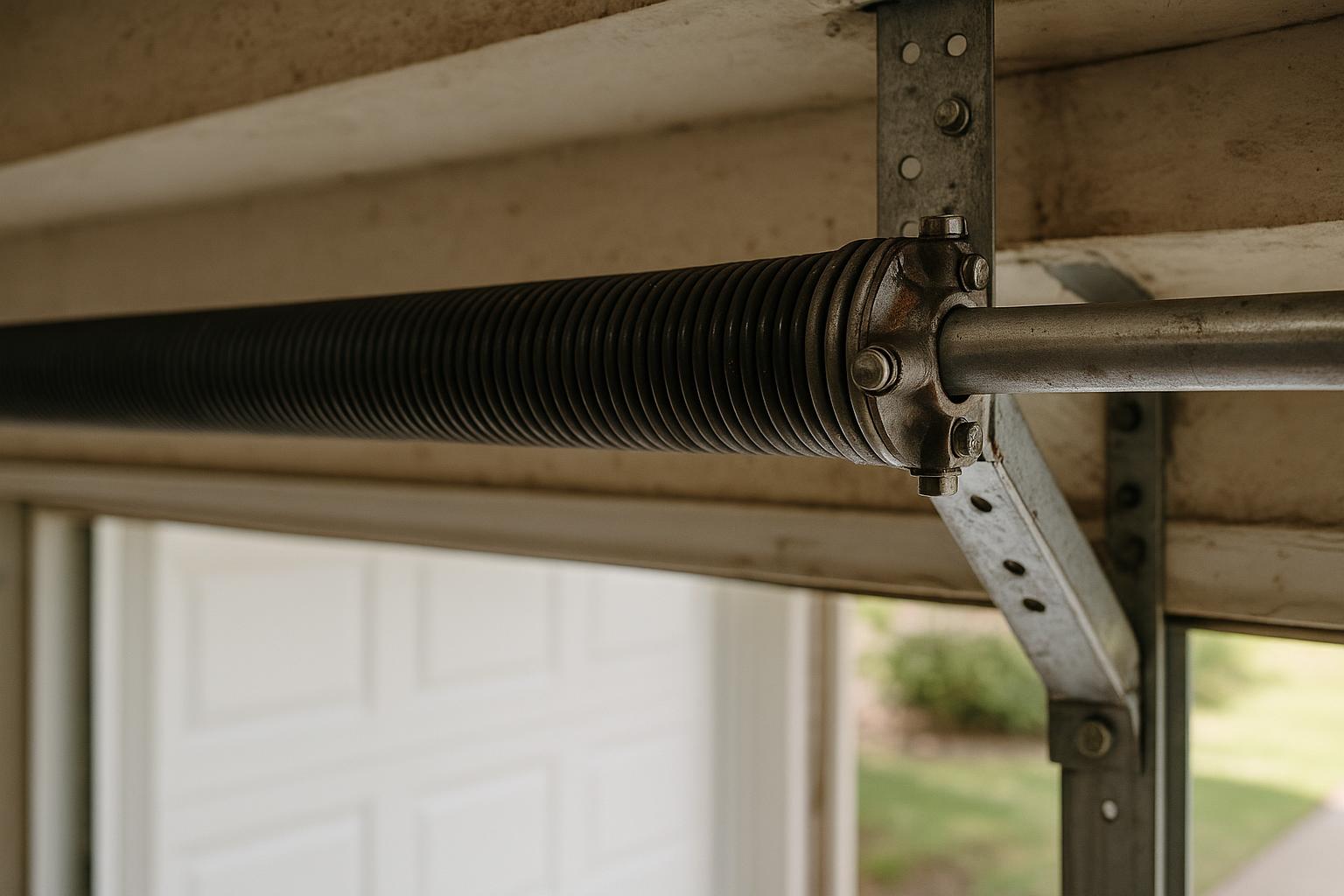
These are mounted on a metal shaft above the garage door opening. They use torque to lift the door and are the most common type found in modern garage door systems. Torsion springs are generally more durable, provide smoother operation, and last longer than extension springs.
Extension Springs
These run along the horizontal tracks on either side of the door. They stretch and contract to raise and lower the door. Extension springs are typically found on older or lighter garage doors and tend to have a shorter lifespan. They also pose a greater safety risk if they snap without a safety cable in place.
If your home in Simi Valley still has extension springs, you may want to consider upgrading to a torsion spring system during your next replacement for improved safety and performance.
Warning Signs Your Garage Door Springs Are Failing
Springs rarely fail without warning. Here are the telltale signs that your garage door springs are nearing the end of their life:
- The door feels heavier than usual: If your garage door is difficult to lift manually or seems sluggish when the opener runs, the springs may be losing tension.
- Visible gaps in the spring coils: A healthy torsion spring has tightly wound coils. If you notice gaps or separation in the coils, the spring is stretched and weakening.
- The door doesn't stay open: When you disconnect the opener and lift the door manually, it should stay in place about halfway up. If it slides back down, the springs aren't providing enough counterbalance.
- Loud bang from the garage: If you heard a loud bang — almost like a gunshot — coming from your garage, a spring has likely already snapped. This is one of the most common calls we get from homeowners across Simi Valley and nearby areas like Moorpark and Thousand Oaks.
- The door opens unevenly: If one side of the door lifts higher than the other, one of your springs may be worn or broken, especially in systems with two springs.
- Rust or corrosion on the springs: Corroded springs are weaker and more prone to sudden failure.
Can You Replace Garage Door Springs Yourself?
This is one of the most common questions we hear, and the answer is a strong no — at least not safely. Garage door springs are under extreme tension. A torsion spring stores enough energy to cause serious injury or even death if it's improperly handled. Every year, DIY garage door spring repairs result in emergency room visits across the country.
Professional technicians have the specialized tools, training, and experience to replace springs safely and correctly. They also know how to properly calibrate the tension so your door operates smoothly and your opener isn't overworked.
What to Expect During a Professional Spring Replacement
When you call a professional garage door company for spring replacement, here's what the process typically looks like:
- Inspection: The technician will assess your current springs, cables, and hardware to determine what needs to be replaced.
- Spring selection: Based on your door's weight and size, the right springs will be selected. This is also a good time to discuss upgrading to high-cycle springs if you want a longer-lasting solution.
- Safe removal: The old springs are carefully unwound and removed using professional winding bars.
- Installation and calibration: New springs are installed, wound to the correct tension, and the door balance is tested.
- Full system check: A good technician will also inspect your cables, rollers, tracks, and opener to make sure everything is working together properly.
The entire process usually takes about an hour, and most reputable companies can complete the job the same day you call.
Should You Replace One Spring or Both?
If your garage door has two torsion springs and only one has broken, we strongly recommend replacing both at the same time. Here's why: if one spring has reached the end of its lifespan, the other one is likely not far behind. Replacing both springs together ensures balanced operation, prevents a second service call in the near future, and saves you money on labor in the long run.
Extending the Life of Your Garage Door Springs
While springs will eventually wear out no matter what, regular maintenance can help you get the most out of them:
- Lubricate your springs with a silicone-based spray every few months to reduce friction and prevent rust.
- Schedule annual tune-ups to have a professional inspect your springs, cables, and overall door balance.
- Don't ignore small problems. A squeaky door, slow operation, or slight imbalance can all be early indicators of spring wear.
Many Simi Valley homeowners add garage door maintenance to their seasonal home care checklist — right alongside HVAC servicing and gutter cleaning.
Don't Wait for a Breakdown
A broken garage door spring is more than an inconvenience — it can leave your car trapped, your home less secure, and your daily routine disrupted. If your springs are showing signs of wear or you can't remember the last time they were inspected, now is the time to act.
At Simi Valley Garage Door Repair, we provide fast, honest spring replacement services for homeowners throughout Simi Valley, Moorpark, Thousand Oaks, Chatsworth, Northridge, and Granada Hills. Whether you need an emergency repair or want to schedule a maintenance check, our team is here to help you keep your garage door running safely and reliably.